
 Pin It
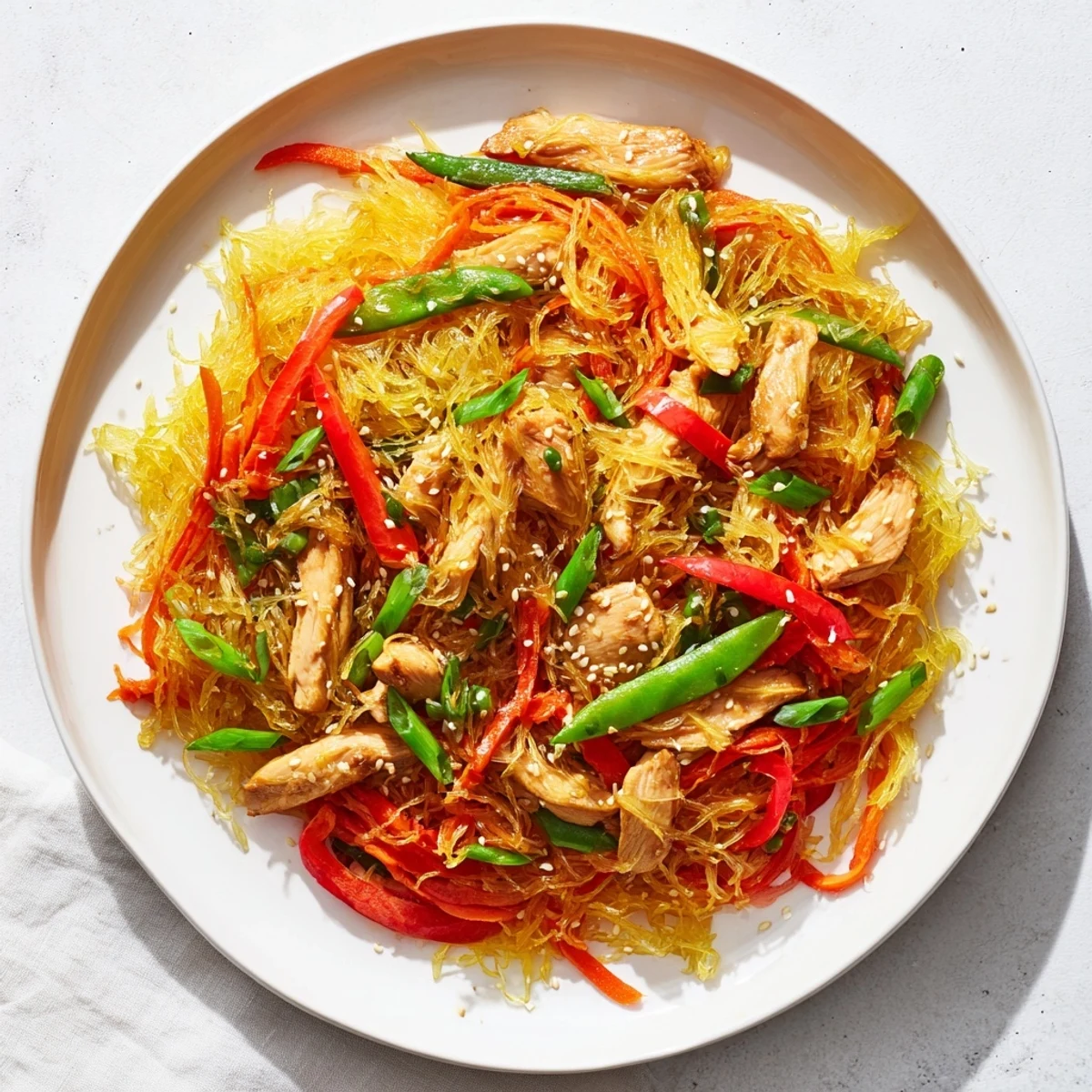
 This healthy take on chow mein swaps traditional noodles for roasted spaghetti squash, creating a gluten-free, low-carb version that doesn't sacrifice flavor or texture. The dish features tender sliced chicken breast, colorful vegetables like snap peas, bell peppers, and carrots, all tossed in a savory-sweet sauce made with tamari, sesame oil, and rice vinegar.
Preparation involves roasting the squash until tender, then shredding it into noodle-like strands before stir-frying with the chicken and vegetables. The result is a satisfying, nutritious meal that delivers all the Asian-inspired flavors you love while fitting into special dietary needs. Perfect for meal prep and ready in just over an hour.
My wok had been sitting in the corner of the kitchen for months, collecting dust and quiet judgment, until a rainy Tuesday when I stared into the pantry and found a spaghetti squash staring back at me like a dare. Something about that pale golden orb whispered takeout cravings, so I decided to mash up comfort food logic and see what happened. The result was a tangle of savory, saucy strands that fooled my partner into thinking I had ordered from our local spot. That lopsided squash earned a permanent spot in my weekly rotation.
I made this for my neighbor Elena after she mentioned she had given up gluten and was tired of sad salads. She stood in my kitchen eating straight from the wok with serving chopsticks, repeatedly saying okay wait this is actually good between bites, and I knew the recipe was a keeper.
Ingredients
- 1 large spaghetti squash: This is your noodle base and the whole reason this recipe works, so pick one that feels heavy for its size with a firm, unblemished skin.
- 1 cup shredded carrots: They bring color and a gentle sweetness that balances the salty depth of the sauce beautifully.
- 1 red bell pepper, thinly sliced: Slice these thin so they cook quickly and maintain a slight crunch in the final dish.
- 1 cup snap peas, trimmed: Their bright snap contrasts perfectly with the soft squash strands and makes every bite more interesting.
- 2 green onions, sliced: Reserve these for garnish because their raw bite at the end lifts everything up.
- 2 cloves garlic, minced: Fresh garlic is nonnegotiable here since the jarred version lacks the punchy warmth this sauce needs.
- 1 inch piece fresh ginger, grated: Grate it directly into the pan so the juices land right where they matter most.
- 2 boneless, skinless chicken breasts, thinly sliced: Slice against the grain and on a slight bias so every piece stays tender and cooks evenly in the hot wok.
- 1/4 cup gluten free soy sauce (tamari): Tamari has a rounder, deeper flavor than regular soy sauce and keeps this dish gluten free without sacrificing any savoriness.
- 1 tablespoon oyster sauce: This is the secret ingredient that adds complexity and a slight sweetness that ties the whole sauce together.
- 1 tablespoon sesame oil: Use toasted sesame oil for its nutty aroma, but add it to the sauce rather than the cooking oil to preserve its fragile flavor.
- 1 tablespoon rice vinegar: A small pour of acidity brightens the sauce and cuts through the richness of the sesame oil.
- 1 tablespoon honey or maple syrup: Just enough sweetness to round out the salty and sour notes without making anything taste like dessert.
- 1 teaspoon Sriracha (optional): Add this if you want a gentle warmth that tingles at the back of your throat without overpowering the other flavors.
- 2 tablespoons vegetable oil: Divided between roasting the squash and stir frying, this neutral oil lets the other flavors shine.
- 1 tablespoon sesame seeds: A final sprinkle adds a subtle toast flavor and makes the dish look like it came from a restaurant.
Instructions
- Roast the squash until golden:
- Preheat your oven to 400 degrees F, halve the squash lengthwise with a sharp knife, scoop out the stringy seeds and pulp, brush the cut sides lightly with oil, and place them face down on a baking tray. Roast for 35 to 40 minutes until the flesh pierces easily with a fork and the edges caramelize slightly.
- Whisk your sauce together:
- While the squash works its magic in the oven, combine the tamari, oyster sauce, sesame oil, rice vinegar, honey, and Sriracha in a small bowl. Stir until the honey dissolves and the sauce looks glossy and unified.
- Sear the chicken pieces:
- Heat one tablespoon of vegetable oil in a large skillet or wok over medium high heat until it shimmers, then add the sliced chicken in a single layer. Cook for 5 to 6 minutes, turning once, until deeply golden on the outside and no longer pink inside, then transfer to a plate.
- Stir fry the vegetables:
- Add the remaining oil to the same pan, toss in the garlic and ginger and let them sizzle for 30 seconds until fragrant, then add the carrots, bell pepper, and snap peas. Keep everything moving for 3 to 4 minutes so the vegetables soften slightly but still have some bite.
- Shred the squash into strands:
- When the roasted squash is cool enough to handle, run a fork through the flesh from end to end, pulling up golden strands that look remarkably like real noodles. Stop when you hit the skin and discard the shell.
- Bring it all together:
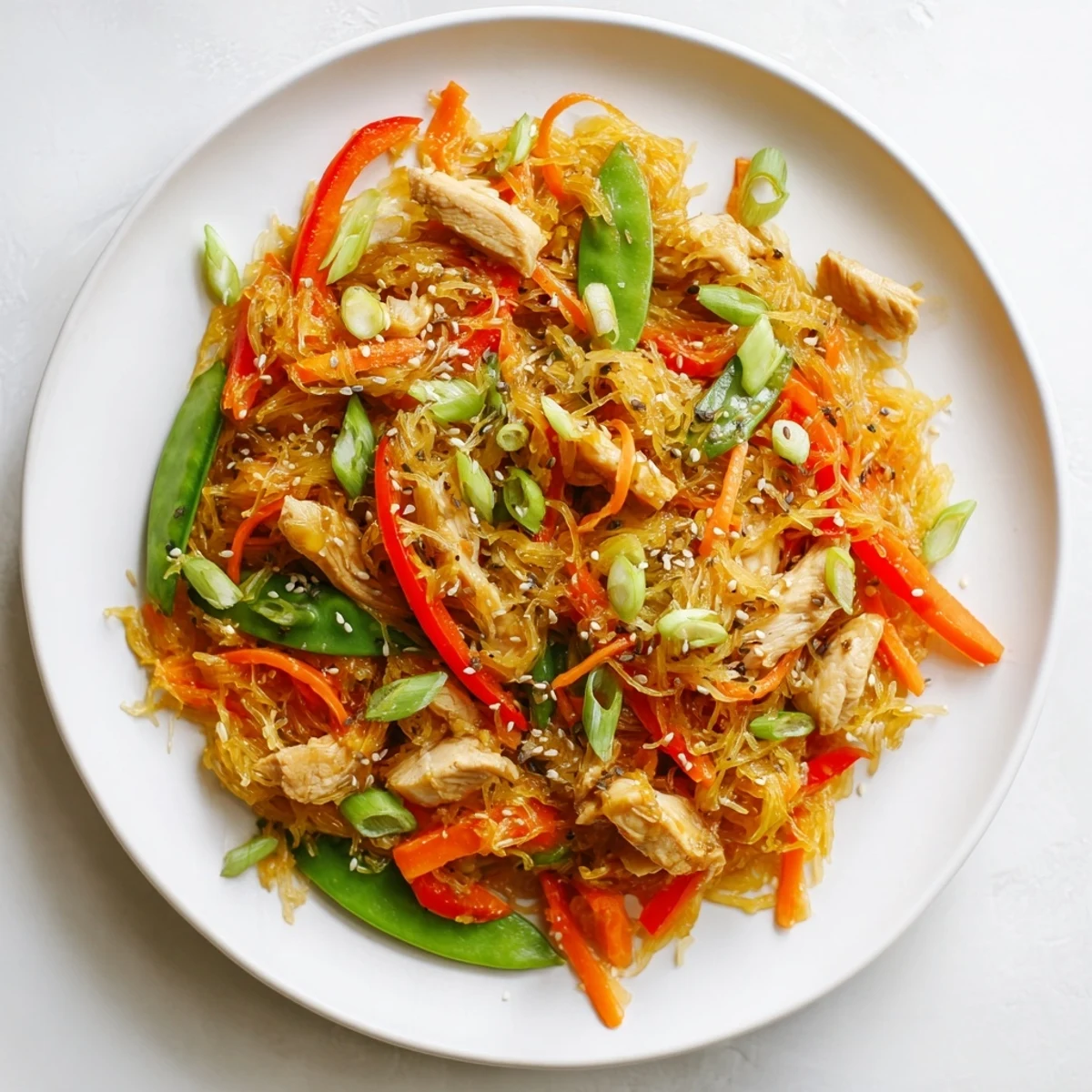
- Add the squash strands to the skillet with the vegetables, return the chicken to the pan, and pour the sauce over everything. Toss vigorously for 2 to 3 minutes until every strand is coated and the whole kitchen smells incredible.
 Pin It
 The night I served this to friends during a backyard dinner, the conversation paused entirely for about four minutes, which is the highest compliment any home cook can receive.
Swaps and Twists That Actually Work
Shrimp cooks even faster than chicken and brings a sweetness that pairs especially well with the ginger and garlic base. Extra firm tofu, pressed and cubed, gets wonderfully crispy in the hot wok and makes this entirely plant based if you swap the oyster sauce for a mushroom based alternative.
Getting the Squash Texture Right
The trick is roasting cut side down so the flesh steams in its own moisture while the exposed skin gets lightly charred. If you flip it halfway through, you lose that gentle steaming effect and end up with dry, stringy strands that no amount of sauce can rescue.
What to Serve Alongside
A pot of jasmine tea or a crisp glass of white wine balances the savory depth of the dish without competing with it. If you want to stretch the meal further, a simple cucumber salad with rice vinegar and a pinch of sugar makes a refreshing counterpoint.
- Keep extra Sriracha on the table for anyone who wants more heat.
- Toasted nori strips scattered on top add a satisfying crunch.
- Leftovers reheat beautifully in a skillet the next day so do not be afraid to make the full batch.
 Pin It
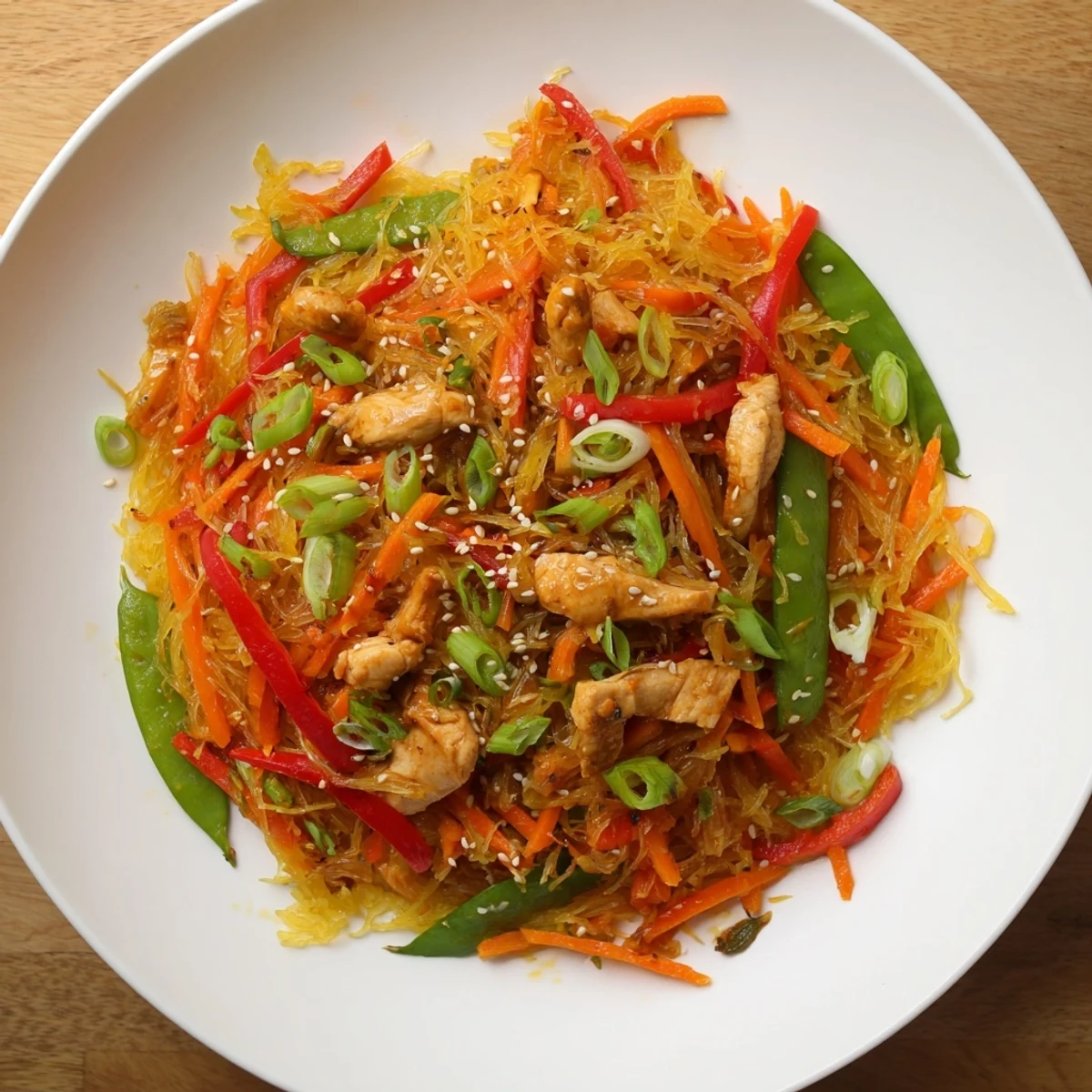
 This recipe is proof that comfort food does not need a carb heavy delivery system to feel deeply satisfying. Keep a spaghetti squash on your counter and you are never far from something extraordinary.
Recipe FAQs
- → Is spaghetti squash chow mein actually low-carb?
-
Yes, spaghetti squash contains significantly fewer carbohydrates than traditional wheat noodles, making this dish naturally low-carb while still providing that satisfying noodle texture you crave in chow mein.
- → Can I make this dish vegetarian or vegan?
-
Absolutely. Replace the chicken with extra-firm tofu or simply increase the quantity of vegetables. For vegan versions, use maple syrup instead of honey and ensure your oyster sauce substitute is plant-based.
- → How do I store and reheat leftovers?
-
Store in an airtight container in the refrigerator for up to 4 days. Reheat gently in a skillet over medium heat, adding a splash of water or additional sauce if needed to prevent drying out. The squash texture holds up surprisingly well.
- → What vegetables work best in this dish?
-
Beyond the suggested carrots, bell peppers, and snap peas, try adding shiitake mushrooms, cabbage, bean sprouts, or bok choy. The key is using vegetables that maintain some crunch when stir-fried quickly.
- → Can I prepare components ahead of time?
-
Yes. Roast the squash and shred it up to 2 days in advance. Slice vegetables and prepare the sauce 24 hours ahead. When ready to serve, simply stir-fry everything together for a quick weeknight dinner.
- → Is the sauce spicy?
-
The base sauce has mild heat from the aromatics, but the Sriracha is optional. Add it gradually to taste, or serve extra on the side so diners can adjust their own spice level.