
 Pin It
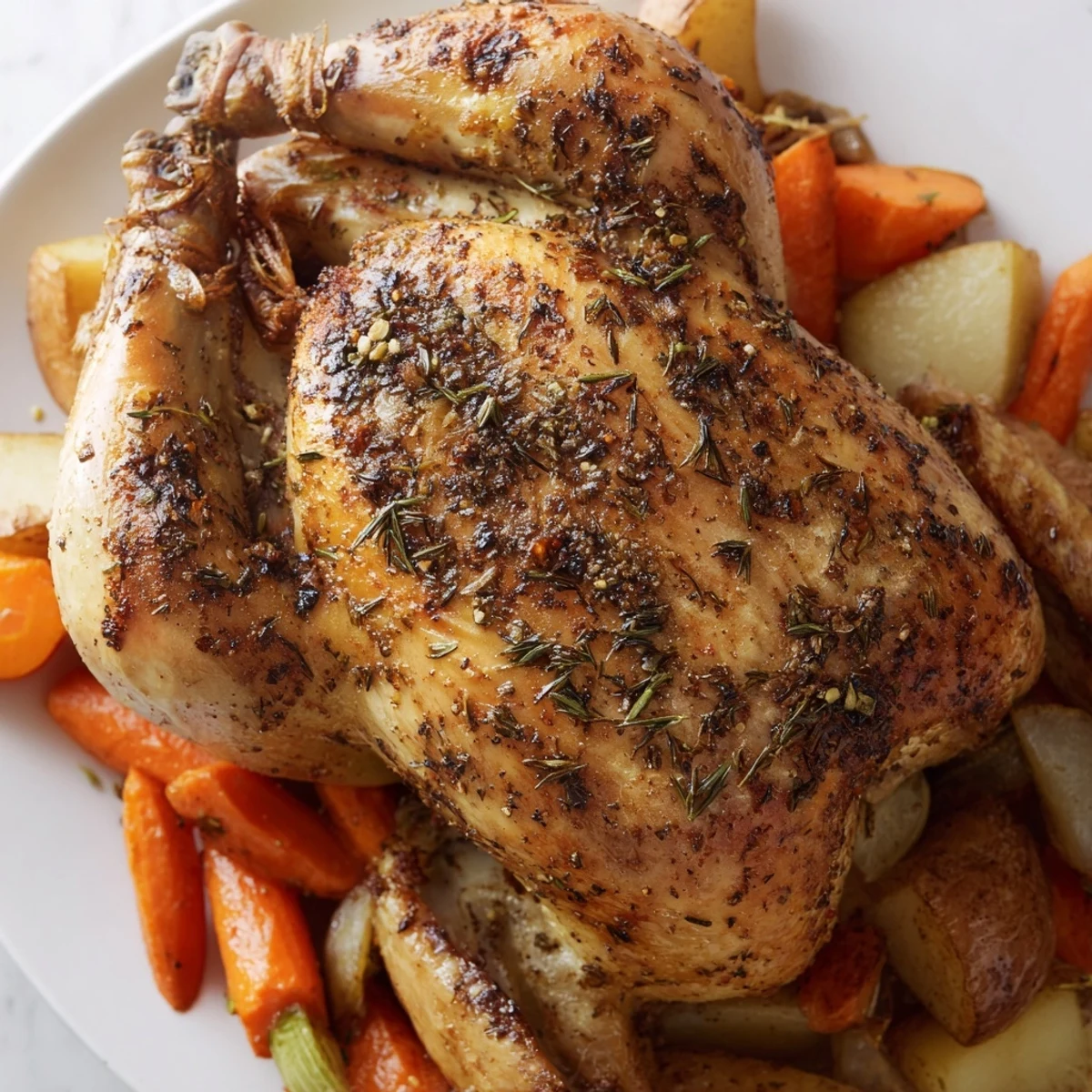
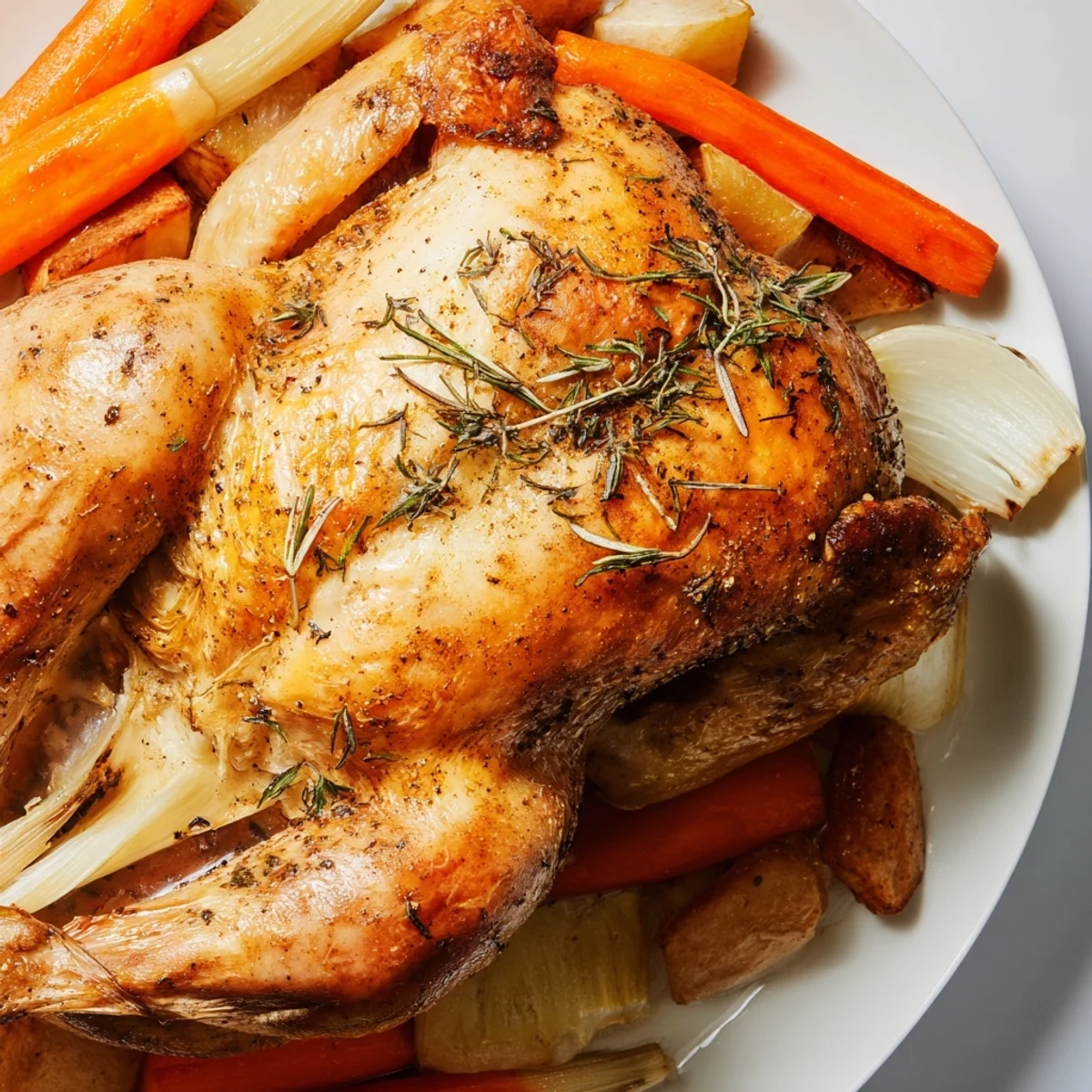
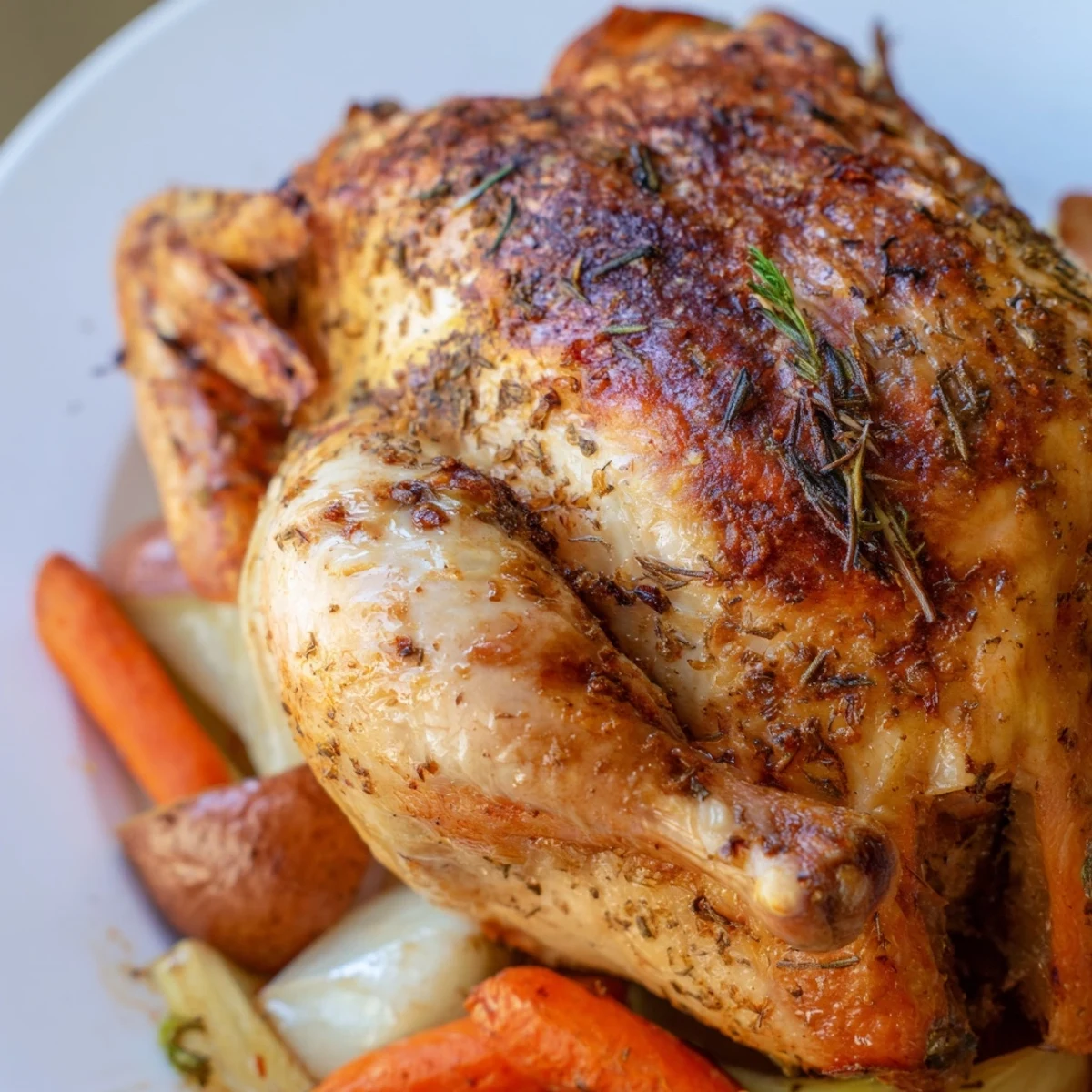
 This roast features a whole chicken seasoned with olive oil, lemon, garlic, and a blend of thyme and rosemary. Nestled on a bed of carrots, potatoes, onions, and celery, it cooks to juicy, tender perfection. Optional white wine adds moisture and depth to the vegetables. Served with pan juices, it offers a simple, flavorful main dish ideal for family gatherings. Resting before carving ensures moist slices and crispy skin when basted.
There's something about Sunday afternoons that makes me crave a whole roasted chicken, the kind where you open the oven and steam rises up to fog your glasses. My mom used to roast them this way, simple and honest, filling the kitchen with the smell of thyme and lemon hours before dinner. I'd watch her pat the bird dry with paper towels, then slip her hand under the skin to season it properly, and somehow that small ritual made it feel less like cooking and more like care. Now when I make this, that kitchen feels close again.
I made this for my friend's birthday dinner last winter, when she was going through a rough patch and needed something grounding and real. As I carved that bird at the table and everyone's faces lit up—not because it was fancy, but because it was exactly what they needed—I understood why this dish has fed families for generations. It's not about impressing anyone; it's about showing up.
Ingredients
- 1 whole chicken (about 1.5 kg/3.3 lbs), giblets removed: Look for a bird that feels dense and has a pale, unblemished skin—avoid anything looking waxy or overly processed.
- 2 tbsp olive oil: This is your vehicle for seasoning and browning; good olive oil makes a noticeable difference in flavor and browning speed.
- 1 lemon, halved: The acid brightens the meat from inside and perfumes everything as it roasts, so use a fresh lemon, not one that's been sitting around.
- 4 garlic cloves, smashed: Smashing rather than mincing releases more fragrance and softens them into the pan juices naturally.
- 2 tsp kosher salt: Kosher salt is larger and easier to distribute evenly than table salt, and it won't make the chicken taste metallic.
- 1 tsp freshly ground black pepper: Grind it fresh; pre-ground loses its bite after a few months sitting in your cabinet.
- 2 tsp dried thyme (or 4 sprigs fresh thyme): If you have fresh thyme, strip the leaves and scatter them inside and out—the woody stems can anchor lemon halves in the cavity.
- 2 tsp dried rosemary (or 4 sprigs fresh rosemary): Fresh rosemary is stronger, so use half the amount if you go that route, and watch for it browning too quickly.
- 4 medium carrots, peeled and cut into 2-inch pieces: Uniform sizes mean they roast at the same pace; cutting them too small turns them to mush.
- 4 medium potatoes, cut into quarters: Leave the skin on if you prefer earthier texture, or peel them for something more delicate.
- 2 medium onions, peeled and quartered: Onions break down and sweeten during roasting, creating a base for gravy if you want to make one.
- 2 celery stalks, cut into 2-inch pieces: Celery adds subtle depth that you taste but can't quite identify, almost like umami in vegetable form.
- 1/2 cup (120 ml) dry white wine or chicken broth (optional): Wine adds richness; broth keeps things milder if you're cooking for kids or prefer less alcohol flavor.
Instructions
- Heat your oven properly:
- Preheat to 200°C (400°F) at least 15 minutes ahead so the temperature is steady when the chicken goes in. A cold oven means soggy skin and unevenly cooked meat.
- Dry and season the bird:
- Pat the chicken completely dry with paper towels—any moisture left behind turns to steam instead of browning. Rub every inch of skin with olive oil, then season generously inside the cavity and all over the outside, getting under the wings and thighs where flavor tends to hide.
- Stuff and secure:
- Stuff the cavity with lemon halves and smashed garlic, then truss the legs with kitchen twine if you want, or just tuck the wings under—either way keeps things compact so heat reaches all parts evenly.
- Prepare the vegetable bed:
- Spread carrots, potatoes, onions, and celery in the bottom of your roasting pan in a single layer. These aren't just sides; they're a platform that catches drippings and seasons itself from below.
- Position and add liquid:
- Set the chicken breast-side up on the vegetables, then pour wine or broth around (not over) everything for moisture and pan sauce. The chicken will release its own liquid, so you're building layers of flavor.
- Roast with attention:
- Roast uncovered for 1 hour 20 minutes, checking at the one-hour mark—if the skin is browning too fast, loosely tent foil over the breast. The chicken is done when juices run clear from the thickest thigh and a thermometer reads 75°C (165°F).
- Rest before carving:
- Let the chicken rest for 10 minutes on a cutting board before you touch it; this lets juices redistribute so every bite stays tender. Pour the pan juices and roasted vegetables into a serving dish and taste before seasoning.
 Pin It
 My daughter was three when she first tried chicken cooked this way, and instead of pushing vegetables aside, she reached straight for the roasted carrots—soft and caramelized, nothing like the raw sticks she'd rejected before. That single moment taught me more about cooking than any recipe could; it's not about the ingredient, it's about patience and heat and understanding how flavor transforms.
Making It Your Own
This recipe is a foundation, not a rule. I've made it with parsnips swapped in for carrots, with fresh herbs from the garden, with white wine one week and bone broth the next. The core stays the same—chicken, heat, vegetables, time—but you can shift it toward what sounds good to you. That flexibility is why it lives in my regular rotation.
Pairing and Serving
Serve this straight from the pan if you're eating casually, or plate it prettier with the chicken centered and vegetables arranged around it. A crisp green salad cuts through the richness, and a chilled white wine—Chardonnay if you like buttery, Sauvignon Blanc if you want bright and clean—sits perfectly alongside. Don't skip the pan juices; spoon them over everything as a natural gravy.
Leftovers and Storage
Shred leftover chicken for salads, sandwiches, or soups, and don't waste those bones—simmer them with water, leftover vegetables, and a pinch of salt for stock that tastes like home. Store everything in the fridge for up to three days, or freeze the chicken for up to three months and the vegetables for one.
- Reheat gently in a low oven so meat stays moist instead of drying out.
- Chicken-and-vegetable soup is the best second dinner; just add broth and simmer.
- Cold roasted chicken makes sandwiches that taste better than anything from a deli.
 Pin It
 This chicken dinner isn't fancy or complicated, and that's exactly why it works. It fills the house with warmth, brings people to the table, and tastes like it took more effort than it did.
Recipe FAQs
- → How do I ensure crispy skin on the roast chicken?
-
Baste the chicken with pan juices halfway through cooking and roast uncovered to help crisp the skin.
- → Can I substitute the vegetables used in the roast?
-
Yes, parsnips or sweet potatoes can be added or substituted to vary flavors and textures.
- → What is the best way to check if the chicken is fully cooked?
-
Insert a thermometer into the thickest part of the thigh; it should read 75°C (165°F) when done.
- → Is it necessary to use white wine when roasting the vegetables?
-
White wine is optional but adds moisture and depth; chicken broth can be used as a substitute.
- → How long should I let the chicken rest before carving?
-
Rest the chicken for 10 minutes after roasting to allow juices to redistribute for moist slices.