
 Pin It
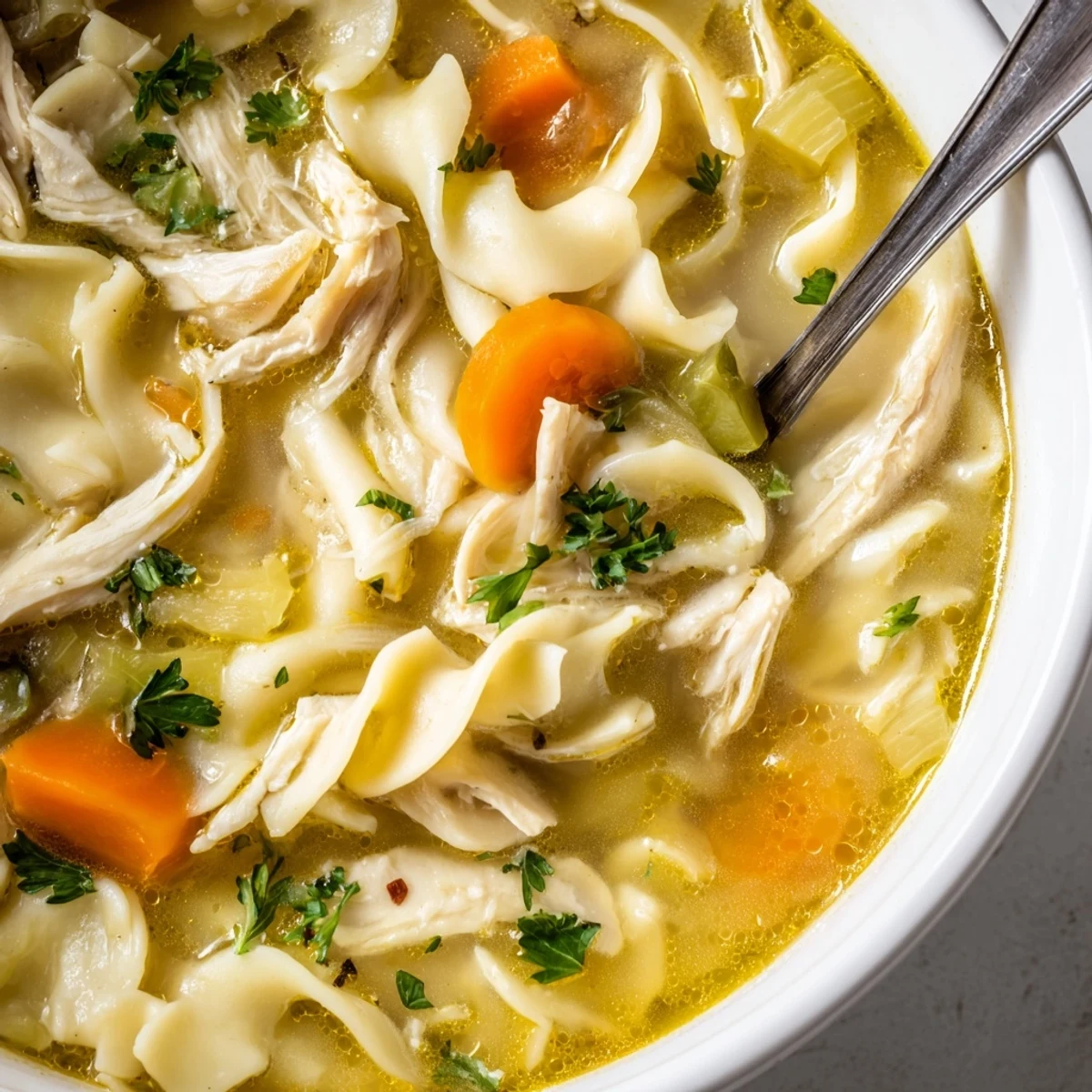
 This comforting dish features tender chicken simmered in a rich, savory broth loaded with fresh carrots, celery, and onion. Silky homemade egg noodles add a delicate texture, creating a satisfying meal that warms the soul. With a blend of thyme, bay leaves, and fresh parsley, every spoonful offers layers of flavor. Preparation includes crafting fresh noodles from scratch, simmering the chicken for tenderness, and finishing with bright herbs for a classic American main dish full of wholesome ingredients.
There's something about making noodles from scratch that slows everything down in the best way. I was experimenting one Saturday afternoon, flour dusting my hands, when I realized that homemade noodles transform chicken soup from good to something people actually talk about afterward. That silky texture you get from rolling and cutting by hand is impossible to rush, and somehow worth every minute. This is the soup I return to whenever I need comfort that tastes like it came from intention, not a can.
I made this for my neighbor when she was recovering from being under the weather, and watching her eat it with that satisfied sigh reminded me why soup matters. It's not fancy, but it's the meal people remember when they need to feel genuinely cared for. There's honesty in a bowl of homemade noodle soup that elaborate dishes sometimes miss.
Ingredients
- All-purpose flour (2 cups): The foundation of your noodles; don't skip the kneading step or they'll taste dense.
- Salt (1/2 tsp for noodles, 1 tsp for soup): Salt in the dough develops flavor from the inside out.
- Eggs (2 large): These bind everything and give the noodles their silky texture and rich color.
- Water (1/4 cup plus extra): Start with this amount and add more only if the dough resists coming together.
- Olive oil (2 tbsp): Use good oil here since it's the foundation of your broth's flavor.
- Onion, carrots, celery (one of each): The holy trinity that makes broth actually taste like broth, not just hot salt water.
- Garlic (3 cloves): Mince it fine and let it bloom in the oil for just a minute before the liquid goes in.
- Chicken stock (8 cups): Quality matters enormously here; taste it before you buy it if you can.
- Bay leaves and thyme: These gentle herbs are what separate homemade from forgettable.
- Chicken breasts (2): Buy them fresh if possible and don't walk away while they simmer or they'll toughen.
- Fresh parsley (1/4 cup): Add this at the very end so it stays bright and doesn't turn into sad green dust.
Instructions
- Make your dough:
- Combine flour and salt in a bowl, then create a well in the middle like you're building a flour volcano. Crack your eggs into the well, add water, and gradually pull flour into the center with a fork until it's shaggy and clumsy looking. Transfer to a floured counter and knead for 5-7 minutes until the dough becomes smooth and elastic; it should feel almost silky under your hands.
- Rest and roll:
- Cover your dough ball with plastic wrap and let it sit for 20 minutes, which sounds like nothing but completely changes how easy it is to work with. When you come back, it'll roll out thin and willing without constantly trying to spring back.
- Cut and dry:
- Roll to about 1/8-inch thickness (thinner than you think), then cut into strips about the width of a pencil. Spread them on a clean kitchen towel or parchment paper while you build your broth; they'll firm up slightly as they dry.
- Build your broth base:
- Heat olive oil in a large pot over medium heat until it shimmers. Add your diced onion, carrots, and celery, and let them soften for about 5 minutes until the kitchen starts smelling like actual cooking; they should soften but not brown.
- Layer in aromatics and stock:
- Add minced garlic and stir constantly for just one minute so it releases its perfume without burning. Pour in your chicken stock, then add bay leaves, thyme, salt, and pepper, and bring everything to a gentle boil.
- Cook the chicken:
- Lower the heat so the soup simmers with lazy bubbles, then add your chicken breasts and let them poach for 20-25 minutes until they're cooked through completely. You'll know they're done when a fork slides through easily with no resistance.
- Shred and return:
- Remove the chicken breasts to a cutting board, let them cool just enough to handle, then use two forks to shred them into bite-sized pieces. Stir them back into the pot so every spoonful gets some chicken.
- Add noodles and finish:
- Add your homemade noodles directly to the simmering soup and stir occasionally for 5-7 minutes until they're tender but still have a gentle resistance to the bite. Stir in your fresh parsley, taste everything, adjust salt and pepper if needed, and fish out those bay leaves before serving.
 Pin It
 My sister called right as I was ladling this into bowls, and instead of rushing her off, I told her to come over. It became one of those unexpected evenings where the soup got cold because we were talking too much to eat it, and neither of us cared. That's when I knew this recipe had become something bigger than just dinner.
Homemade Noodles: Worth the Effort
Making noodles from scratch feels intimidating until you actually try it, and then it becomes almost meditative. Your hands will know when the dough is ready because it'll feel alive and smooth, not sticky or stiff. The rolling pin might seem tedious, but that's actually where the magic happens; cutting them thin and letting them dry slightly gives you that delicate texture you can never replicate with store-bought pasta. Every time you eat these noodles later, you'll taste the moment you made them with your own hands.
Building Flavor in Your Broth
The secret to broth that actually tastes like something is giving your vegetables time to soften and release their flavor before you dump in stock. That five-minute sauté of onion, carrots, and celery isn't wasted time; it's when your broth starts developing real depth instead of tasting like hot water with salt. Letting the garlic bloom in the oil for that single minute after they're softened changes everything about how aromatic your entire pot becomes. This is the foundation that makes people ask for seconds.
Make It Your Own
Once you understand the basic structure, this soup becomes endlessly flexible. You can add a squeeze of fresh lemon juice at the end for brightness, or a pinch of nutmeg if you want something more complex. Some days I add mushrooms sautéed with the vegetables, or a handful of spinach at the very end, and it's never the same soup twice. If you're short on time, rotisserie chicken works perfectly; nobody needs to know you didn't poach it yourself.
- Make the noodles ahead and freeze them in a single layer, then add them straight from the freezer without thawing.
- For richer, deeper broth, use bone-in chicken thighs instead of breasts and simmer them longer.
- Taste constantly and adjust salt and pepper to your preference, because every stock and every kitchen is a little different.
 Pin It
 This soup has a way of bringing people together without any fuss or pretense. Make it whenever someone needs comfort, or whenever you need to remember why cooking from scratch still matters.
Recipe FAQs
- → How do I make the homemade noodles?
-
Mix all-purpose flour with salt, then add eggs and water to form a dough. Knead until smooth, rest it, roll out thinly, and cut into strips before drying.
- → Can I use store-bought broth instead of homemade stock?
-
Yes, store-bought broth works well, though a richer homemade stock enhances flavor. Always check for allergens or additives if using store-bought.
- → What is the best way to cook the chicken for tender texture?
-
Simmer boneless chicken breasts gently in the broth until cooked through, then shred and return to the pot for maximum tenderness.
- → How long should I cook the homemade noodles in the soup?
-
Cook the noodles in the simmering broth for 5 to 7 minutes, stirring occasionally until tender but not mushy.
- → Are there any good substitutions for ingredients in this dish?
-
Rotisserie chicken can replace freshly cooked chicken for a quicker version, and a squeeze of lemon juice brightens the flavors nicely.