
 Pin It
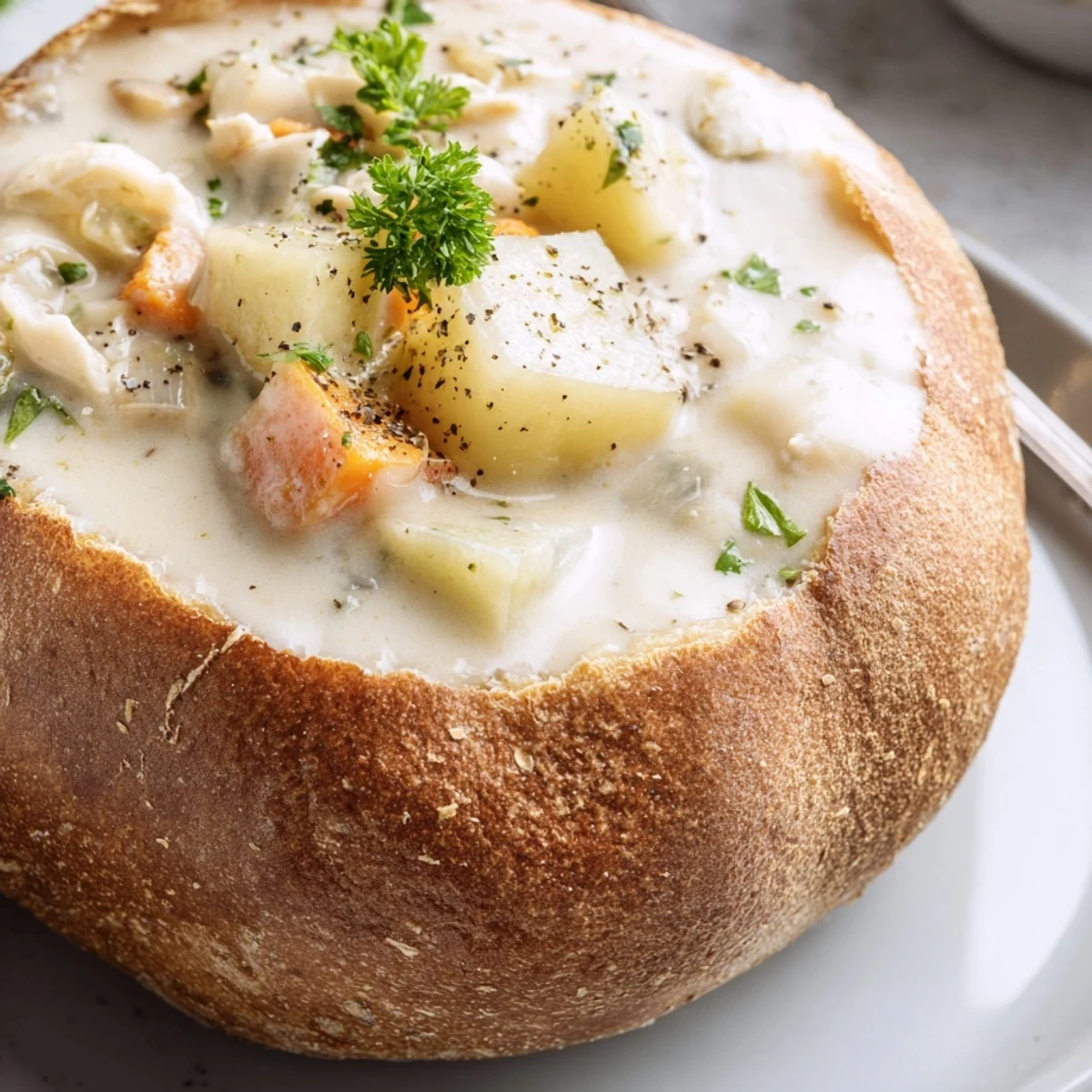
 This velvety New England clam chowder combines tender clams, diced potatoes, and aromatic vegetables simmered in a creamy base made with milk and cream. Finished with a touch of thyme and bay leaf, the chowder is ladled into warm, crusty sourdough bread bowls for a satisfying, comforting meal. The preparation involves making a roux with flour and butter to thicken the broth, ensuring a rich, smooth texture. Optional parsley garnish adds fresh color and flavor.
Prepare the sourdough bowls by hollowing and baking them to hold the chowder without sogginess. The savory blend of onions, celery, and potatoes enhances the natural sweetness of the clams, creating a harmonious balance that’s perfect for a medium-difficulty main dish for four servings. This comforting dish pairs beautifully with crisp white wine or a light lager.
There's something about the smell of butter and celery hitting hot cream that instantly transports me to a New England coastal town I've never actually lived in. The first time I made clam chowder, I was trying to impress someone who grew up eating it every winter, and somehow the sourdough bowl—crispy on the outside, soft where the soup soaks in—became the moment they stopped being skeptical and started asking for seconds. Now I make it on the kind of day when the kitchen needs to feel warm and full, when ordinary ingredients transform into something that tastes like comfort tastes.
I made this for my friend Maya on a rainy Tuesday when she'd had a terrible week, and watching her break into the bread bowl with a spoon—the steam rising, the way her shoulders relaxed—reminded me that sometimes food is the most honest conversation. She ate every drop, bread and all, without saying much, and that silence felt like everything.
Ingredients
- Chopped clams (canned, 2 cans): These are sweeter and more tender than fresh clams in chowder, and you get all their briny juice—don't drain it away.
- Bottled clam juice (1 cup): This builds the oceanic depth that makes people think you know what you're doing.
- Unsalted butter (2 tablespoons): Use good butter; it's the foundation and its flavor won't be hidden in cream.
- Onion and celery (1 onion, 2 stalks): Dice them small so they cook fast and disappear into the soup, becoming flavor rather than texture.
- Yukon Gold potatoes (2 medium): These hold their shape instead of turning to mush, and their buttery flavor belongs in creamy soup.
- All-purpose flour (3 tablespoons): This thickens the soup into something luxurious, not watery—but stir it in raw and it'll taste chalky.
- Whole milk and heavy cream (2 cups milk, 1 cup cream): The combination gives you richness without being overwhelming; I learned this by ruining a batch with all cream once.
- Bay leaf and dried thyme: Bay leaf sings in cream soups, but remember to fish it out before serving or someone will find it.
- Sourdough boules (4 small, 6-inch): These hollow out cleanly and toast into crispy-edged bowls; get them from a real bakery if you can.
- Fresh parsley and black pepper (optional garnish): The parsley adds a bright note that cuts through the richness and makes it feel less heavy.
Instructions
- Toast your bread bowls first:
- Preheat the oven to 350°F. Slice off the top quarter of each sourdough boule and scoop out the insides with a spoon, leaving a sturdy 3/4-inch shell. Place the hollowed bowls and their little hats on a baking sheet and bake for 10 minutes until they firm up and start to smell nutty. This is not a step to skip—it keeps the bowl from becoming a soggy puddle.
- Build your flavor base:
- Melt butter in a large pot over medium heat, then add your diced onion and celery. Cook for 5 minutes, stirring occasionally, until they soften and turn translucent but don't brown. You want them gentle and sweet, not caramelized.
- Add potatoes and make your roux:
- Toss in the diced potatoes and cook for 2 minutes to warm them through. Sprinkle the flour over everything and stir constantly for 1 minute—this cooks out the raw flour taste and creates a paste that will thicken your soup.
- Add the liquid slowly and carefully:
- Pour in the clam juice (both canned and bottled), milk, and cream while whisking constantly. Add your bay leaf and thyme. Bring to a gentle simmer, stirring every minute or so to prevent a skin from forming on the bottom.
- Let it simmer and thicken:
- Lower the heat to medium-low and simmer uncovered for 15 minutes. The soup will gradually thicken and the potatoes will turn tender. You'll feel the moment it's done—it coats the back of a spoon and smells like the coast.
- Finish with clams and seasoning:
- Stir in your canned clams and all their juices, simmering for just 2 more minutes. Taste it, season with salt and black pepper, then carefully fish out the bay leaf with a spoon.
- Serve immediately in warm bowls:
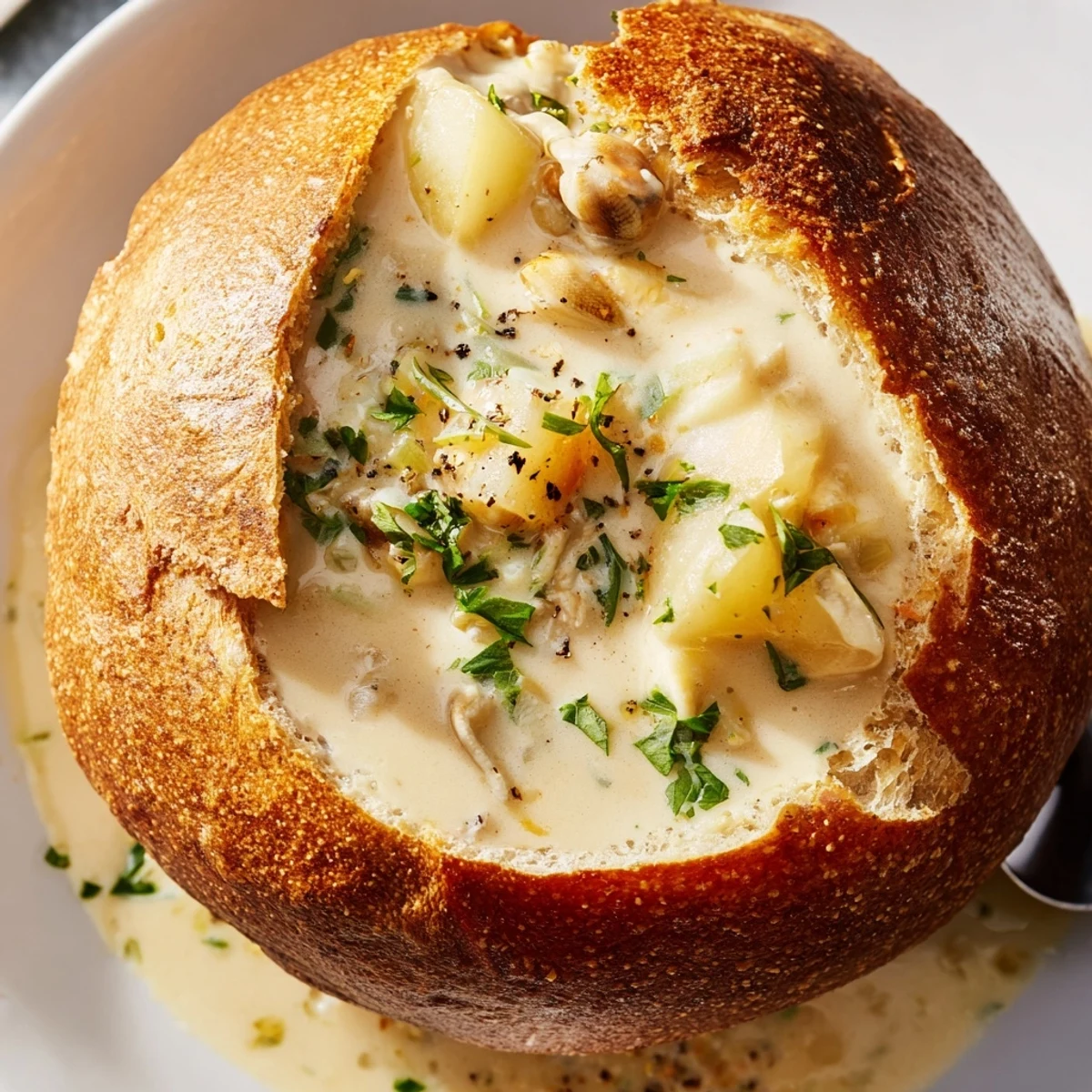
- Ladle the hot chowder into your toasted sourdough bowls. Garnish with parsley if you have it fresh, crack some black pepper over the top, and serve right away while the bowl is still warm and the soup is at that perfect creamy temperature.
 Pin It
 My neighbor who grew up in Boston tasted this and went quiet for a long moment, then told me it reminded her of a restaurant she hadn't thought about in twenty years. That's when I understood that chowder isn't really about the ingredients—it's about making someone feel like they're sitting by a window overlooking the water, even if they're in a kitchen in the middle of landlocked nowhere.
Why Sourdough Bowls Matter
The sourdough bowl is not a cute gimmick—it's engineering. That thick, tangy crust holds up to heat and cream without falling apart, and the interior bread soaks up just enough soup to become something between a spoon and a bite of bread. I once tried using regular round bread and it turned into mush in five minutes, proving that not all bread is created equal for this job. Hunt down real sourdough from a bakery counter, not the packaged stuff from the bread aisle.
The Secret to Silky Texture
The magic happens in the roux—that paste of flour and butter that thickens the cream without making it grainy. I learned this the hard way by trying to skip the flour and just dumping cornstarch in at the end, which created a weird slick texture that broke when the clams released their juice. The flour cooks in the butter first, gets whisked into cold liquid slowly, and then gently simmers until the starch granules swell and actually thicken the soup the right way. It takes patience, but that's what makes it creamy instead of weird.
Variations and Adaptations
The beautiful thing about this soup is how it adapts to what you have and what you love. Bacon makes it richer—I brown a couple of strips, chop them, and add them with the vegetables. Half-and-half can replace the heavy cream if you're watching calories, though you'll notice the difference in how it feels on your tongue. Some nights I use fresh thyme if the garden is still giving, and it's sharper and brighter than the dried version.
- Bacon (2 strips) cooked and crumbled adds a smoky depth that nobody will complain about.
- Fresh thyme is more delicate than dried, so use half as much or add it at the very end so it doesn't disappear.
- A splash of white wine (1/4 cup) whisked in before the cream makes the whole thing taste like a restaurant version.
 Pin It
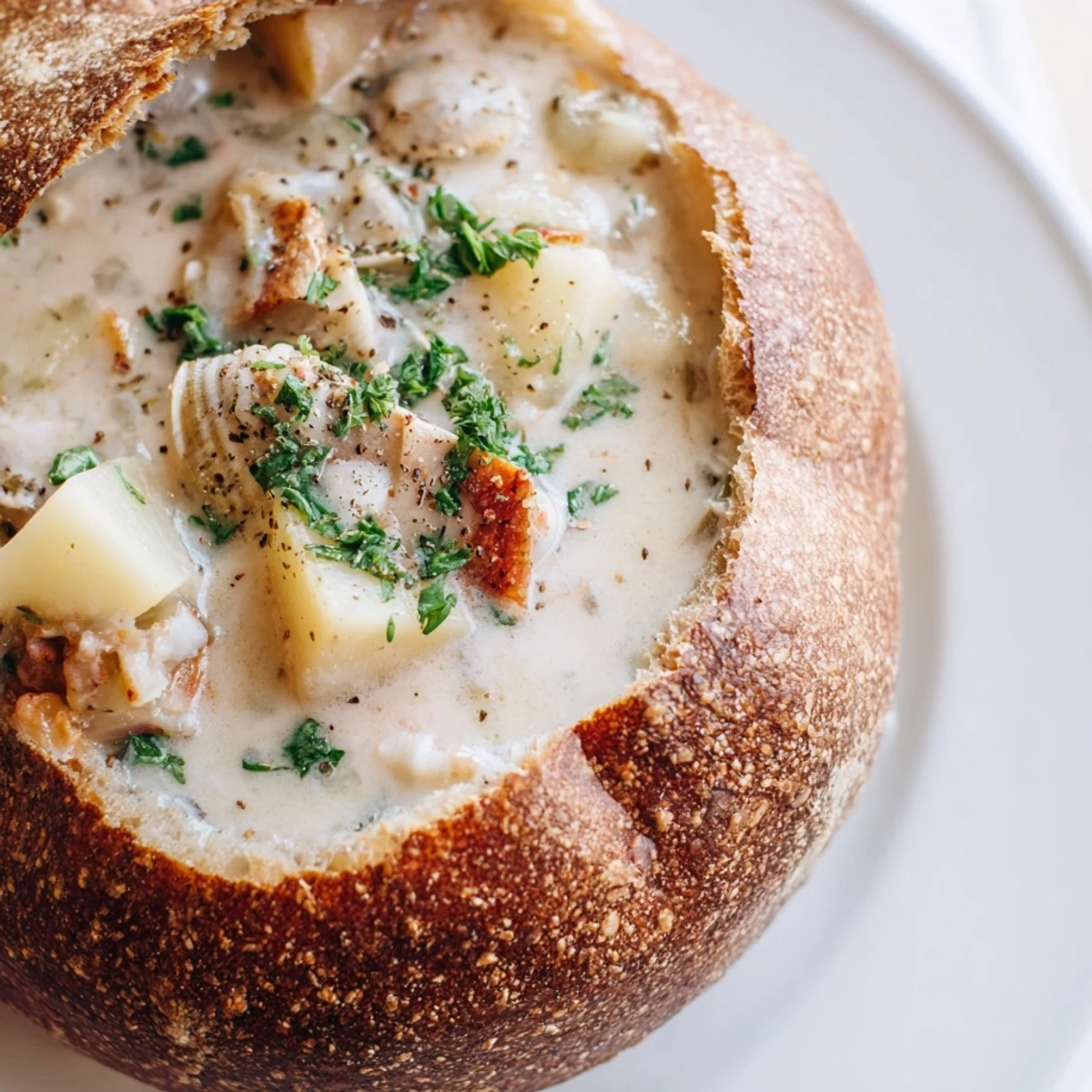
 This is the kind of soup that turns an ordinary evening into something warm and remembered. Make it when you need to slow down.
Recipe FAQs
- → How do you prevent the sourdough bowl from becoming soggy?
-
Bake the hollowed-out sourdough bowls for 10 minutes before filling to create a sturdy crust that resists sogginess when ladling the chowder.
- → Can I use fresh clams instead of canned for this dish?
-
Fresh clams can be used but require cleaning and cooking before adding. Their juices should be reserved for maximum flavor in the chowder base.
- → What thickening method is used for this creamy chowder?
-
A roux made by stirring flour into sautéed vegetables and butter thickens the chowder, providing a smooth, velvety texture.
- → Are there good substitutes for heavy cream in this chowder?
-
Half-and-half can lighten the richness without sacrificing creaminess and gives a lighter version of the chowder.
- → What herbs enhance the flavor of this chowder?
-
Bay leaf and dried thyme add subtle aromatic notes that complement the clams and vegetables, enriching the overall flavor profile.