
 Pin It
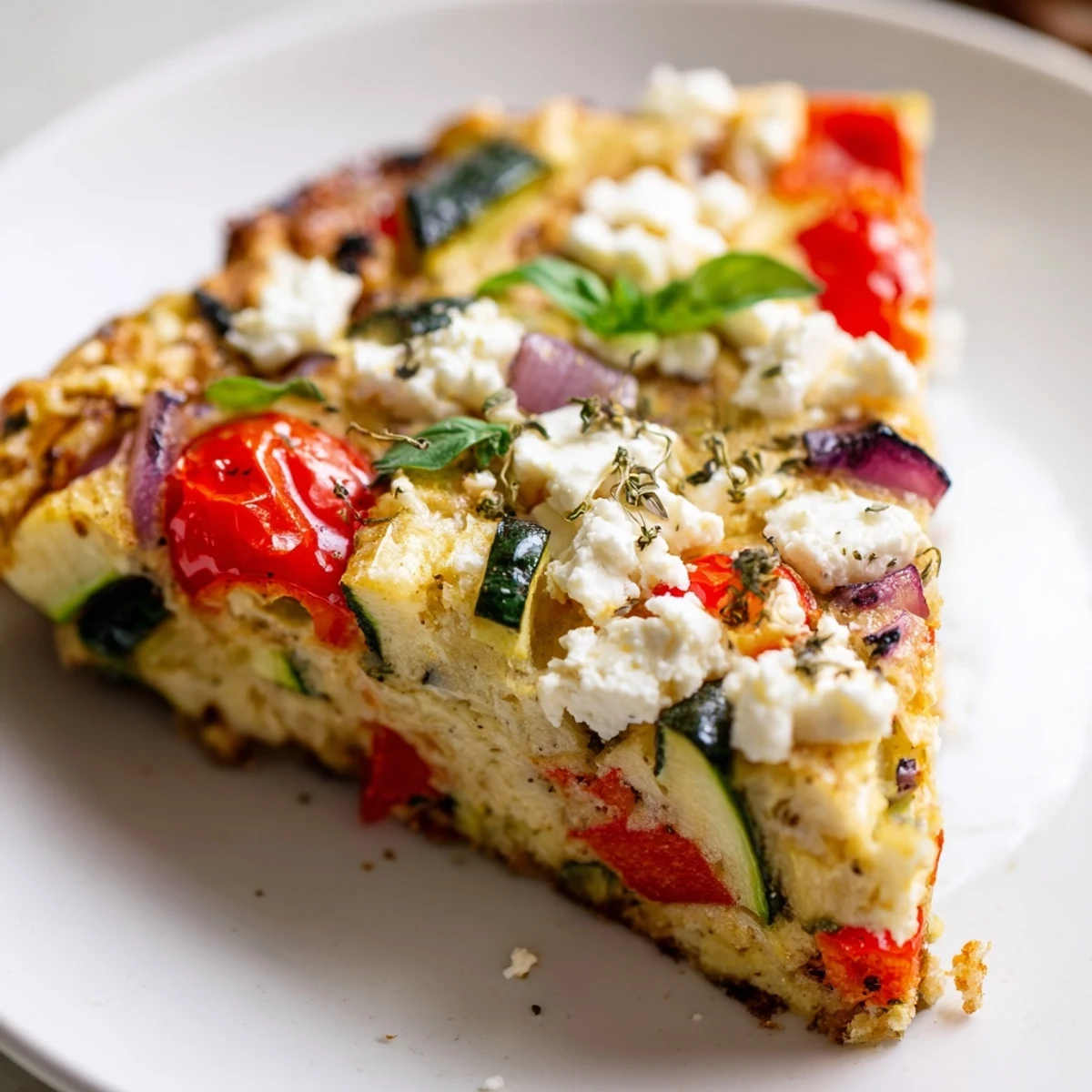
 This flavorful frittata blends tender roasted vegetables with creamy goat cheese for a satisfying meal. Toss diced bell pepper, zucchini, onion, and cherry tomatoes in olive oil and seasonings before roasting to deepen flavors. Whisk eggs with milk and thyme for a luscious base, then combine with the roasted vegetables and cheese in an ovenproof dish. Bake until set, garnish with fresh herbs, and enjoy a warm, nutrient-rich dish that suits vegetarian and gluten-free diets alike. Ideal for brunch or a light dinner.
There's something about a Sunday morning when the kitchen smells like caramelized vegetables and eggs that makes everything feel right. My neighbor mentioned she'd mastered the perfect frittata, and I was skeptical until she invited me over and I tasted how the goat cheese melted into pockets of creaminess throughout. I went home determined to recreate that moment, and after a few experiments, this roasted vegetable version became my own kitchen victory.
I made this the first time for my partner's family gathering, nervous about whether a vegetarian main would feel substantial enough. When three people came back for seconds and asked for the recipe before they left, I knew I'd found something special. Now it's my go-to when I need to feed people something that feels both comforting and a little bit fancy.
Ingredients
- Red bell pepper and zucchini: Dicing them to roughly the same size means they roast evenly, avoiding mushy peppers and undercooked zucchini.
- Cherry tomatoes: Halving them keeps them from bursting while still letting them caramelize at the edges.
- Red onion: Thinly sliced onions become sweet and mellow in the oven, a trick I learned by accidentally buying red instead of yellow.
- Olive oil: Use something you actually like to taste because it matters here, coating the vegetables and the pan.
- Eggs and milk: The milk makes the frittata slightly custardy rather than dense, the difference between something that feels springy and something that feels heavy.
- Goat cheese: Crumble it just before using so the pieces stay distinct rather than melting into the egg, creating those pockets of tanginess.
- Thyme: Fresh is always better if you have it, but dried works when it's what you've got on hand.
Instructions
- Roast the vegetables:
- Toss your diced peppers, zucchini, halved tomatoes, and sliced onion with olive oil, salt, and pepper, then spread them out on a baking sheet so nothing's crowded. They need space to caramelize rather than steam, which is the difference between a pale, watery result and something with actual color and depth.
- Get the oven ready:
- While the vegetables roast for 18 to 20 minutes, adjust the oven to 350°F once they're done. The lower temperature prevents the eggs from puffing up and then sinking.
- Whisk the egg mixture:
- Combine eggs, milk, salt, pepper, and thyme in a bowl, whisking until the whole mixture is uniform and pale. This is worth doing properly because lumpy eggs means uneven cooking.
- Bring it together:
- Grease an ovenproof skillet, spread the roasted vegetables across the bottom, pour the egg mixture over them, and scatter goat cheese on top. It should look abundant and slightly messy, not pristine.
- Bake until just set:
- At 350°F, this takes 18 to 22 minutes depending on your oven's personality. You want the center to move just slightly when you jiggle the pan, not completely firm, because it keeps cooking as it cools.
- Rest and serve:
- Let it cool for 5 minutes so the eggs finish setting and the flavors settle. Slice warm or serve at room temperature with fresh basil or parsley scattered on top if you have it.
 Pin It
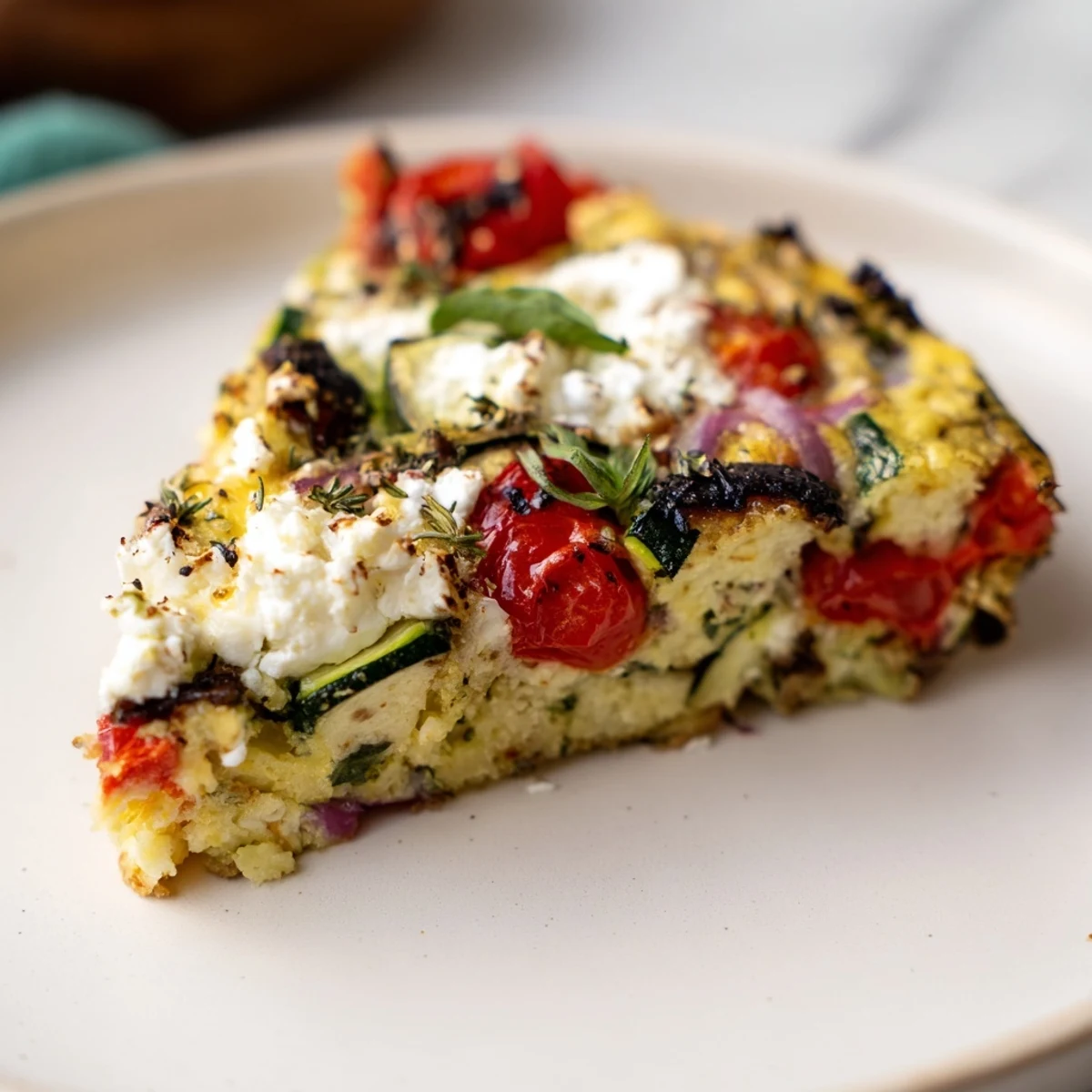
 There was a moment when my sister took her first bite and closed her eyes like she was tasting something that transported her somewhere good. It made me realize that frittata is one of those dishes that sits at the intersection of simple and elegant, feeding people without pretension but making them feel cared for anyway.
Why This Frittata Works for Any Occasion
A frittata doesn't care what time you serve it or what you call it, which is part of its charm. It's brunch-appropriate but feels substantial enough for dinner, elegant enough to serve guests but relaxed enough to slice and eat standing at the counter. The roasted vegetables give it structure and visual appeal, while the goat cheese handles all the heavy lifting in the flavor department.
Vegetables You Can Swap In
The beauty of this dish is that whatever vegetables are looking good at the market can work. Roasted asparagus is elegant, mushrooms add earthiness, spinach wilts right into the eggs without needing precooking. I've made this with leftover roasted vegetables from dinner the night before, which turns two meals into three and feels like clever cooking.
Cheese Substitutions and Pairings
Goat cheese is tangy and creamy, but feta brings salinity, ricotta adds creaminess without sharp flavor, and sharp cheddar works if you want something more assertive. Think about what would taste good with your vegetable choices, how you'd pair them at a dinner table. The cheese isn't a background player here, it's part of the conversation.
- If you're using feta, use slightly less because it's saltier and can overwhelm the delicate eggs.
- Leftover frittata keeps for three days wrapped in the refrigerator, tasting just as good cold the next morning.
- A simple green salad and crusty bread turn a slice into a complete meal.
 Pin It
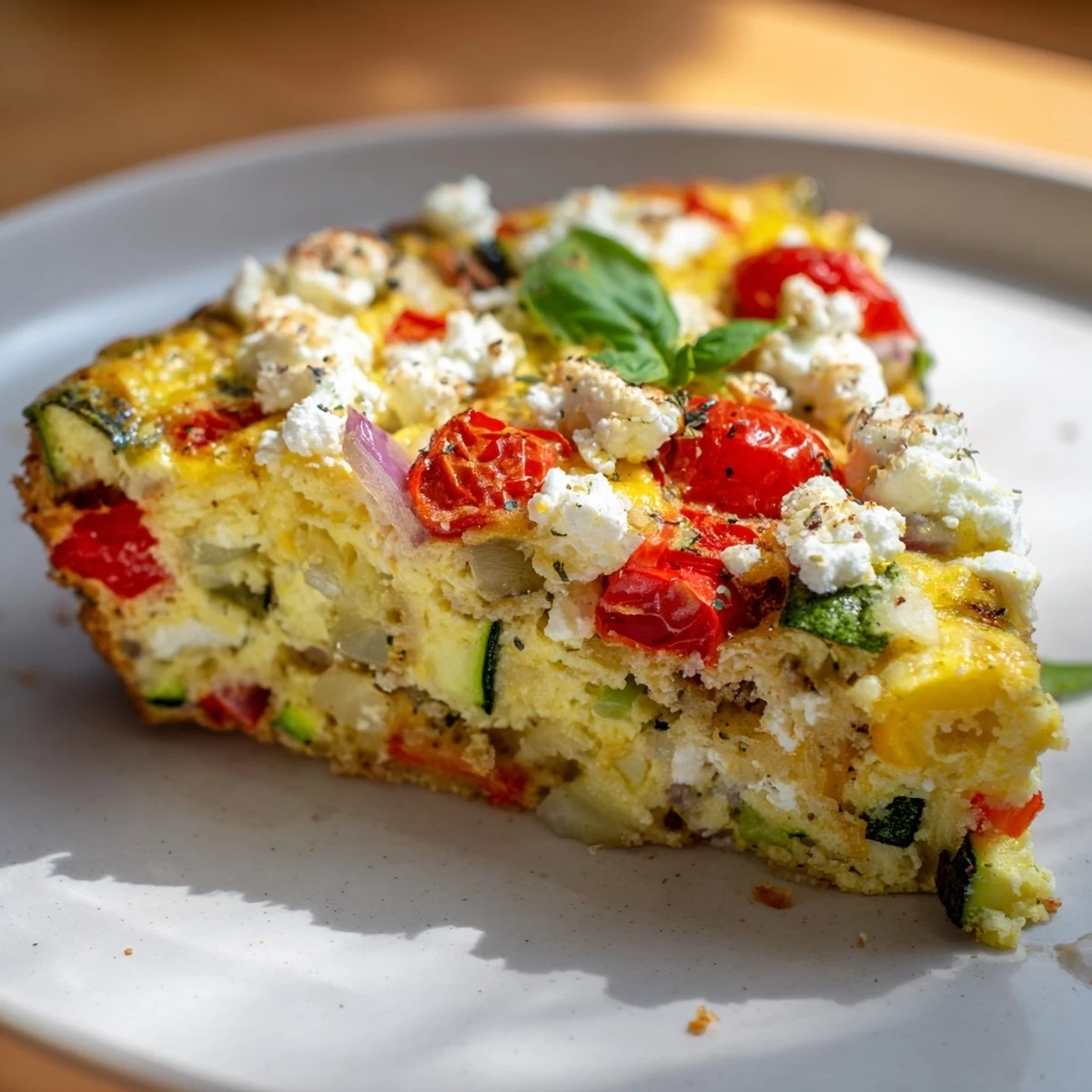
 This frittata has become my answer to the question of what to make when I want to feel confident in the kitchen. It's humble enough to eat alone on a weeknight and impressive enough to share.
Recipe FAQs
- → How do I achieve perfectly caramelized vegetables?
-
Roast diced vegetables at 400°F for 18–20 minutes in a single layer with olive oil and seasoning to enhance natural sweetness and develop tenderness.
- → Can I substitute goat cheese with other cheeses?
-
Yes, creamy cheeses like feta or ricotta can replace goat cheese while maintaining a rich texture and tangy flavor.
- → What herbs pair well with this dish?
-
Fresh basil, parsley, and thyme complement the roasted vegetables and goat cheese, adding brightness and aroma.
- → Is this dish suitable for gluten-free diets?
-
Yes, the ingredients used are naturally gluten-free, but always check cheese labels to avoid additives that may contain gluten.
- → How can I add variety to the vegetable mix?
-
Incorporate spinach, mushrooms, or asparagus to introduce different textures and flavors while keeping the dish vibrant.